Cybernetics
Why Cybernetics
We protect endangered animal A. Then we add animal B to the list. Then C. We are very good at solving problems one at a time — and that is exactly why the problems keep coming. Cybernetics asks a different question: what system keeps producing them?
Think about how you locate yourself in the world. You are a citizen of a country, and within it a province, and within that a city, and a street, and a house. Each step narrows, slots inside the last, and the whole arrangement feels so natural it hardly seems like a choice at all.
It is a choice, though — and an old one. It traces back to Aristotle’s principle of non-contradiction: a thing cannot be “A” and “Not A” at once, so everything can be sorted into A or Not A, then A into B and Not B, and onward, branching into a clean hierarchy of categories.
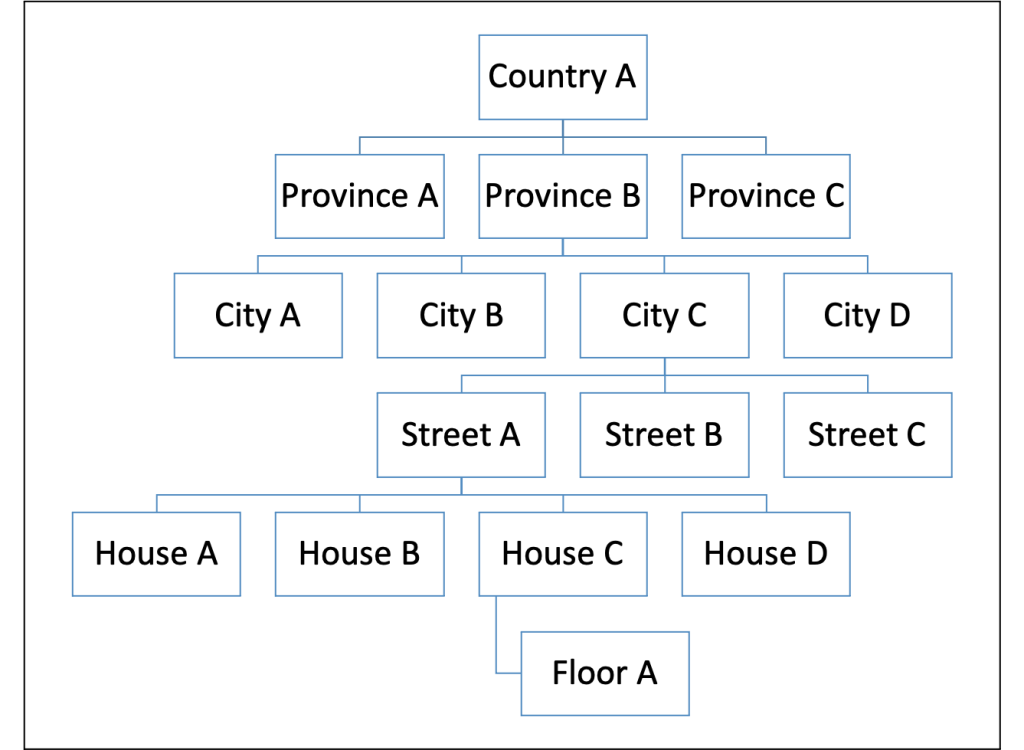
The instinct is baked into the word science itself, which descends from roots meaning to cut, to divide, to split. We understand a complex thing by cutting it down to its smallest piece and studying that. We build our models by deciding what is and is not — which features (call them A, B, and C) a thing must have to count as the thing at all. This is how we make sense of the world and how we organize it, and so our whole apparatus of management and understanding has become reductionist at its core: hierarchical in principle, divisive in approach.
But reality does not hold still inside those boxes. The A’s and B’s and C’s of any real model are tangled together with countless other variables, and for the model to mean anything, it would have to capture all those intricate, often invisible relationships. Every simplification — every act of cutting down — costs the model some of its grip on the real thing it was meant to describe.
You can watch this happen in my own field. We drew a category called Mediation and another called Arbitration, and then, finding that real disputes spilled into the space between them, we invented Med-Arb to cover the gap. The categories keep needing patches. And the question never goes away: among all these silos, is there something in between that we have not named yet? Some territory our understanding has not reached?
Dispute resolution shows the same pattern at a larger scale. We named a category, Litigation, and made it the primary way to resolve disputes — and around it we built courts, legal systems, lawyers, codes of ethics, everything required to operate cleanly within that one box. That was our complete answer to something as complex and alive as human conflict. Later, as we learned more about behavior and the limits of the courtroom, we built a second box beside it and called it Alternative Dispute Resolution — the “A” and “Not A” reflex, right there in the name.
Even the phrase dispute resolution carries the same logic. We chose resolution on purpose, because the reductionist mind assumes that to deal with a problem you break it into parts and then determine whether it can be resolved.
Here is the thing, though. Understanding the unknown and gaining some control over our world have always driven our survival, and they always will. We model complex systems in order to grasp how they behave, so that we can manage them. That impulse is exactly right. Cybernetics serves the very same goal — but it refuses the cutting. It takes a complex system as a whole, studies the dynamics running through it, and asks how control actually works inside something living and interconnected.
The difference shows up the moment a problem appears. The reductionist, problem-solving paradigm says a problem can be isolated and acted on by itself — so we protect endangered animal A, and then, when another species turns up at risk, we add animal B to the list, and later C, and we never ask what keeps putting animals on the list.
Cybernetics starts somewhere else entirely. It holds that everything is interrelated, and from that, two ideas follow that change how you work:
A “problem” is not a thing. It is a state of a system — and that system sits nested inside larger systems. So resolving a problem is never really about the problem. It is about managing the system until it reaches an equilibrium in which the problem is no longer produced.
That is the cornerstone, and everything else is built on it. A dispute is a state of a social system. To resolve it, our approach has to be able to manage that system toward an equilibrium it can rest in. Which is why the work ahead is to understand the cybernetics of conflict and dispute — and to learn, concretely, how equilibrium is found and held.
References
[1] From Latin scientia, “knowledge, a knowing; expertness,” from sciens, “intelligent, skilled” — present participle of scire, “to know,” probably originally “to separate one thing from another, to distinguish,” related to scindere, “to cut, divide” (from PIE root *skei-, “to cut, split”).
[2] Alternative Dispute Resolution.
[3] Resolution comes from the Old French resolution (a breaking into parts), or directly from Latin resolutionem (the process of reducing into simpler forms), from the past-participle stem of resolvere (loosen) — the same root as resolve.