Viable System
From Management to Leadership – Redefining The Agile Organization
A junior seaman spots an iceberg on the horizon. By the time the captain's order to turn reaches the deck, the hull is already cracked open. The story is absurd — until you notice your own organization doing exactly the same thing.
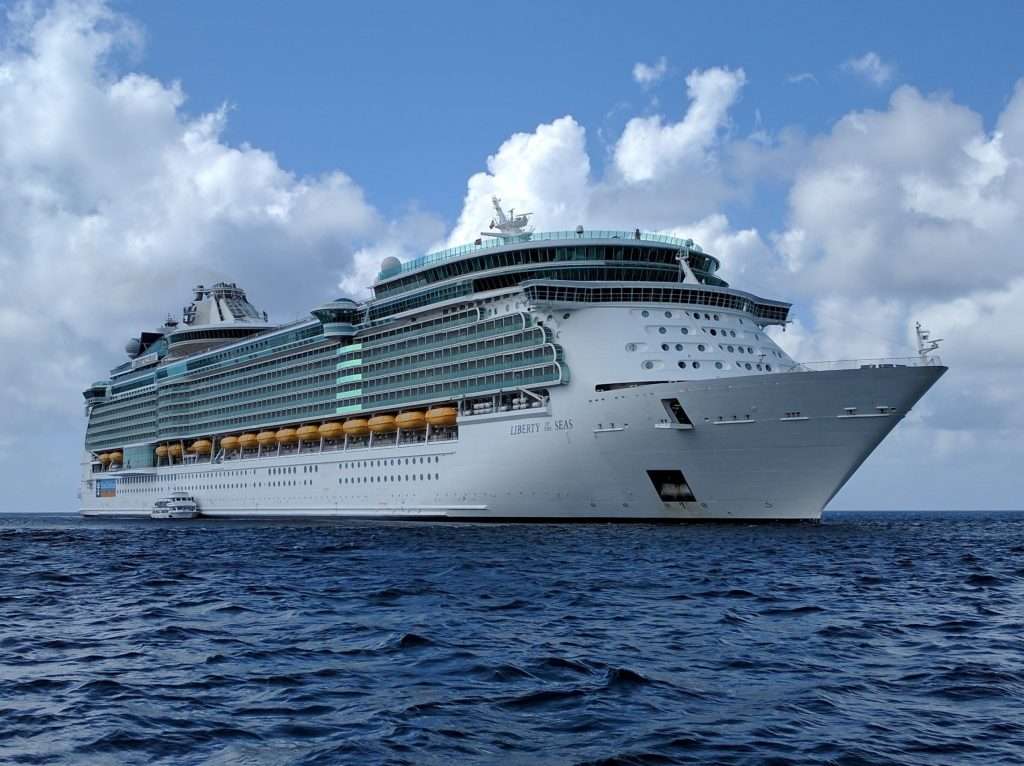
A speedboat can turn on a coin. A container ship cannot, no matter how good its captain is, and no amount of urgency changes the physics. Yet large, hierarchical organizations, full of good intentions, keep launching massive changes and keep failing to see the warning signs until the change has already become a crisis they are managing in reverse. To understand why, it helps to spend a morning on the big ship.
A day onboard the big ship
A junior seaman recruit, on watch, sees a huge mass on the horizon. He thinks: iceberg. He reports it at once to his supervisor, who — being conscientious — folds it into a report for his boss, the petty officer, at the end of the shift.
The petty officer knows he cannot pass every sighting up the ladder. He needs to confirm it is really an iceberg first. So he uses the ship’s internal channels to send an order back down the chain: confirm the report.
Up on deck, the junior seaman confirms it. It is an iceberg, and it is coming on fast. He sends his confirmation back up the chain. Now the petty officer can pass the report upward with certainty. His job is safe, for the moment.
The report climbs, link by link, until it finally reaches the captain as an urgent warning: collision ahead. He issues an immediate emergency order to turn.
The order reaches the operations room just as they are dealing with the enormous crack the iceberg has already torn in the hull.
It is an extreme picture, deliberately. It seems absurd — no one would really run a ship this way. And yet this is exactly how many organizations adapt to change, without ever noticing they are doing it.
Awareness
Organizations are interconnected webs of human beings, and they are far more complex than we tend to think. Countless variables push on them from inside and out, and that number climbs steeply as the organization grows.
The way we cope with all that variety is to filter it. Our perceptual systems screen out what looks irrelevant so we can see only what we are looking for — which is efficient, and also exactly how the iceberg gets filtered out as just another shape on the horizon. The organizations that screen out the information that matters, and catch it too late, tend to leave the field to their competitors.
One lethal variety attenuator is sheer ignorance.
Stafford Beer
Effective organizations are the ones that design their information filters well — so that the valid, important, time-sensitive signal gets through while the noise falls away. In practice, that means two things: they build genuine awareness throughout the organization, and they keep the communication channels open and fast enough to carry that awareness where it needs to go.
Agility
In a fast-moving environment, a viable system has to move with agility. The window to act is too narrow to afford rigidity. Decisions have to be made, actions taken — and that means every manager has to trust the judgment of their people to do the right thing, in the right way, without waiting for permission.
The traditional organization runs the opposite way. There, the manager tells employees what to do and how to do it, and checks the work against a standard; the employees, in turn, trust the manager’s judgment and do as they are told. Decisions travel up, orders travel down, and the iceberg waits for no one.
An effective organization is not a handful of managers sitting on top of a crowd of doers. It is a network of interconnected managers, all following the leadership of the organization. All the way down the hierarchy, everyone is a manager — each one managing their own work well and making real decisions from the awareness they hold of their own environment.
Shifting the paradigm toward leadership
An agile organization is self-managing. It does not burn its narrow window sending reports up and orders back down. Every sub-system — department, unit, individual — carries its own managerial function, organizing and directing its own work in harmony with the whole.
Which means every employee has to operate with that mindset. They are not just doers. They are thinkers and decision-makers — they are viable systems in their own right.
And it reframes the job at the top. The head of an organization is not there to manage the operations. They are there to lead the performance of the whole system and secure its viability:
- Envisioning the future
- Asking the questions
- Setting high-level policy
- Shaping the guiding value system
- Coordinating the sub-systems toward the vision
- Aligning and harmonizing
- Motivating and inspiring
- Spreading awareness
- Empowering people
Meanwhile, managers throughout the organization, top to bottom, hold the work of management, control, and monitoring:
- Coordinating with other sub-systems
- Managing the constant conflicts on the way forward
- Raising expectations
- Collaborating to set direction
- Planning the details
- Collaborating to implement the plans
- Appealing to hearts and minds
- Holding the line on standards and compliance
- Developing people
- Creating awareness
- Monitoring performance and direction
An agile organization, in the end, is a Viable System. It asks us to redefine everyone in it as an interconnected manager following the organization’s leadership — to treat every employee not as a pair of hands but as a thinker and decision-maker. Not just a doer. A viable system, the same as the whole they belong to.