Dispute Resolution
Abstractions and Generalizations — What Every Mediator Should Know
Two people can use the very same word and mean two different things by it — and never notice.

Two people sit across from each other using the same word — fair, respect, reasonable — and mean two different things by it, and neither one notices. That quiet gap is where a great deal of conflict lives, and learning to see it has made me a far more effective mediator than any technique ever did.
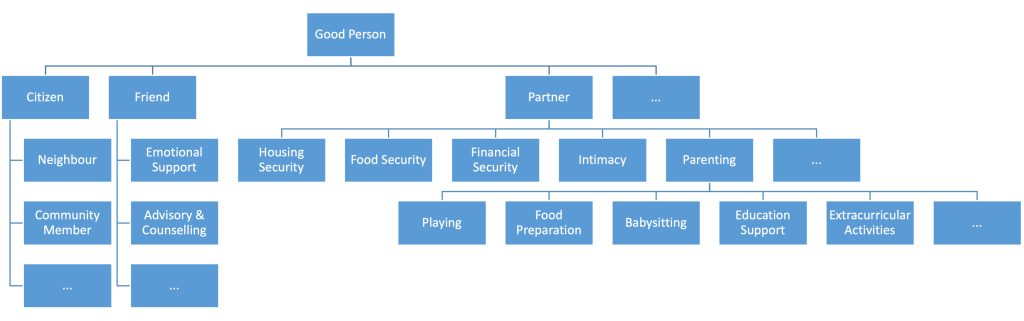
We order the world through abstraction and generalization. We build categories, rank them, and then use them — good person, bad person — to judge and respond to the people in front of us. I think of these as personal hierarchies of abstraction, and the more clearly I understand someone’s, the better I can help. The simple, easily forgotten truth underneath it: the perceptions two people bring to the same thing may be completely different.
The hierarchy of abstractions
We learn, gradually, to sort the world into groups — cats, dogs, chairs, people, enemies — to make sense of what we encounter. With time the mind gets better at it, constantly fine-tuning its categories, slowly building a working model of the world.
And early on, we learn to abstract the abstractions themselves: breaking categories apart, finding the traits they share, and building higher categories to hold the lower ones. Out of that grows a whole hierarchy of abstraction through which each of us perceives the world — and no two of these hierarchies are quite the same.
– Read more: Canadian Arbitration and Mediation Journal, Vol. 31, No. 2, p. 24